 John
Kitchen planning increasingly treats refrigeration as part of the overall interior rather than an isolated appliance. Cabinet depth, door movement, ventilation, internal capacity, and visual alignment all influence whether the finished space feels cohesive and remains practical in daily use. China refrigerator manufacturing has responded to this shift with more attention to integrated formats, especially as homeowners and appliance brands seek refrigeration that works within carefully planned layouts.
Against this broader development, Homa Appliances offers cooling solutions that include built-in configurations alongside several other refrigerator categories, reflecting the different spatial and functional demands found across international markets.
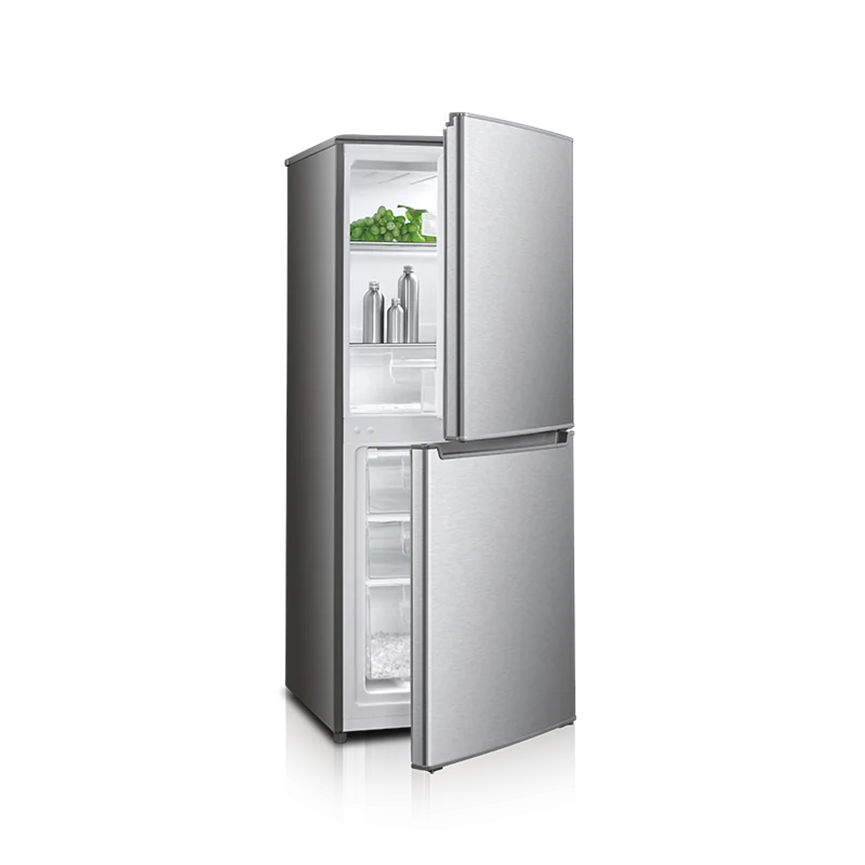
Why Built-In Refrigeration Requires More Than A Flush Exterior
Integration begins with dimensions, but cabinet depth alone does not determine whether an installation works well. Door clearance, hinge movement, ventilation pathways, and surrounding furniture all need consideration before a unit is selected. Insufficient clearance can affect accessibility, while poorly planned airflow around the appliance may influence thermal performance.
Built-in refrigeration also changes how storage space is perceived. A refrigerator that sits within cabinetry can preserve a consistent visual line, yet the internal volume may differ considerably from a freestanding model occupying a similar footprint. Comparing net capacity, compartment proportions, and usable drawer space therefore gives a more meaningful picture of everyday practicality.
Installation style deserves equal attention. Panel-ready configurations may be coordinated with kitchen cabinetry, while different hinge arrangements can affect how the door interacts with adjacent units. Such details become particularly important in compact kitchens, where several millimeters can influence the usability of the entire layout.
How No-Frost Technology Supports Everyday Storage
Frost formation occurs when moisture from warmer air reaches sufficiently cold surfaces and freezes. Traditional manual-defrost designs require periodic removal of accumulated ice, while no-frost systems circulate cold air and use automatic defrosting to reduce frost accumulation inside the appliance.
Temperature stability is another consideration. Opening the door introduces warmer air, and placing large quantities of food inside can temporarily change the compartment environment. Airflow distribution helps circulate cooled air more evenly, while insulation and compressor control contribute to maintaining the required temperature range.
Food placement can also affect cooling efficiency. Overcrowding shelves may restrict circulation, whereas leaving appropriate space around stored items allows cooled air to move more freely. Practical storage habits therefore complement the engineering features built into the appliance.
What Cabinet Integration Changes About Refrigerator Selection
Choosing a China refrigerator for an integrated kitchen involves more than comparing exterior appearance. Buyers and appliance developers need to examine cabinet dimensions, installation method, door configuration, ventilation requirements, electrical access, and the relationship between external measurements and internal capacity.
Homa’s built-in portfolio includes models such as FD2-32.BI. Its published specifications give the unit a height of 1770 mm, width of 540 mm, and depth of 545 mm, with 253 liters of total net capacity divided between 175 liters of refrigerator space and 78 liters of freezer space. The model also lists Total No-Frost, reversible-door installation, dual cooling, an LED touch display, an LED touch display, fresh-zone storage, and automatic defrosting.
Such specifications illustrate why integrated refrigeration should be assessed as a system rather than judged from the front panel alone. The same model lists door-on-door and sliding-door installation options, while its technical information includes 39 dB(A) noise performance, an N-ST climate type, R600a refrigerant, and CE, GS, CB, and KC certifications. Actual suitability still depends on the requirements of the target market and installation environment.
Design And Food Preservation Need To Work Together
Modern kitchen aesthetics can influence appliance development, but appearance should not overshadow food-storage requirements. Fresh vegetables, dairy products, frozen ingredients, and beverages benefit from different storage arrangements, making compartment design an important part of refrigerator usability.
Humidity management provides another example. Fresh-food drawers can create a more suitable micro-environment for certain ingredients, while separate freezer storage reduces the need to repeatedly open the main refrigerated compartment. Internal lighting, shelf placement, drawer accessibility, and door storage all contribute to how efficiently users manage food.
Cooling architecture matters behind the visible surfaces as well. Homa’s FD2-32.BI specifications identify dual cooling, airflow cooling, automatic defrosting, two food-care drawers with one optional drawer, and safety-glass shelving. These features demonstrate how internal engineering and storage organization can be considered together rather than treated as separate design topics.
Evaluating Refrigeration For Different Markets
Regional conditions can influence refrigerator requirements considerably. Ambient temperature, kitchen size, preferred installation styles, and household food-storage habits can vary between markets and affect built-in refrigerator requirements. Consequently, manufacturers and appliance brands often need several configurations rather than one universal design.
Product development also involves balancing cabinet dimensions with usable capacity and cooling requirements. External dimensions affect installation and kitchen compatibility, while internal capacity determines the available storage space. Technical specifications provide the measurable basis for making these trade-offs.
The broader China refrigerator industry reflects this diversity through side-by-side, multi-door, combi, upright, slot-in, chest-freezer, and built-in categories. Homa’s official portfolio lists these formats and provides product filtering based on dimensions, capacity, depth, and regional markets, showing how refrigeration can be developed around different installation and usage requirements.
Conclusion
Successful integrated refrigeration depends on coordination between cabinet planning, cooling technology, storage organization, and local market requirements. Visual alignment may define the first impression, yet dimensions, airflow, temperature management, door movement, and usable capacity determine how well the appliance performs in everyday conditions.
For appliance brands and kitchen planners assessing China refrigerator solutions, technical documentation offers a stronger basis for comparison than appearance alone. With a broad cooling portfolio and dedicated built-in options, Homa Appliances provides refrigeration manufacturing and ODM capabilities suited to different international product requirements.

 admin